
🎯 Quick Takeaways
- ✅ Meal planning on a tight budget isn’t about fancy spreadsheets. It’s about deciding what you’ll eat before you’re hungry and standing in an aisle making it up
- ✅ Plan around what’s cheap and on sale that week, not what you’re craving. The craving costs you double
- ✅ Build most meals on a short list of cheap staples (eggs, oats, beans, rice, frozen veg, whatever’s $1-ish and filling) and the math takes care of itself
- ✅ “Shop your own kitchen first.” Half the time I was buying things I already had two of, hiding in the back of the cabinet
- ✅ Cook once, eat twice. Planned leftovers were the single biggest thing that stopped my 8pm “ugh, I’ll just order something” $24 DoorDash habit
- ✅ I got my groceries down to roughly $55 a week for one person without eating sad beige food every night. It’s a system, not a punishment
📑 Table of Contents
- Where to start with meal planning on a tight budget
- Shop your own kitchen before you make a list
- Build meals around a few cheap staples
- Plan around the sales, not your cravings
- Use a loose theme-night framework
- Cook once, eat twice (plan your leftovers)
- Write a real list and actually stick to it
- Check the unit price, not the sticker price
- Go meatless a few nights a week
- Buy whole, not pre-cut and pre-portioned
- Shop the markdown and discount racks
- Keep a little price book in your phone
- Batch cook and use your freezer on purpose
- Plan one “use it up” meal every week
- Shop once a week, and never hungry
- Leave room for one easy meal so you don’t rage-order
- The stuff I got wrong
- What actually changed
- Questions people ask me
For a long time my idea of dinner was opening the fridge at 8pm, staring into it like it owed me money, finding half an onion and some questionable yogurt, and then ordering $24 of Thai food I couldn’t really afford. I did this maybe four nights a week. I told myself I was “bad at cooking,” but that wasn’t it. I was bad at deciding, and deciding when you’re already starving and tired is how you end up paying DoorDash a part-time salary. Meal planning on a tight budget is the thing that finally fixed it, and I want to be clear up front that I came to it kicking and screaming, because it sounded like the most boring possible use of a Sunday.
Here’s what changed my mind. I did one of those line-by-line looks at three months of my Citibank account, the same kind that scares me straight about once a year, and the food number made me put the phone down. Between groceries I let rot and takeout I ordered because the groceries rotted, I was somewhere north of $600 a month feeding one person. One. Me. A person who is not large and does not eat that much.
So I started planning. Badly at first. But within a couple months I had it down to around $55 a week, eating actual real food I liked, and I stopped that low hum of dread every time I thought about money and dinner in the same sentence.
None of this is hard. It’s just a handful of small habits stacked together. Here’s the whole system.
Where to start with meal planning on a tight budget
The mistake almost everyone makes, me very much included, is starting with recipes. You open Pinterest, you save eleven gorgeous dinners, you write a shopping list off of them, and then you spend $90 on saffron and three kinds of fresh herbs you’ll use once. That’s not budget meal planning. That’s just regular meal planning with a Pinterest tax.
Real meal planning on a tight budget runs the other direction. You start with what’s cheap and what you already have, and you build meals up from there. The food comes first, the recipe comes second. It feels backwards for about a week and then it feels obvious.
I keep typing “plan” but the honest word for what actually saves the money is “decide.” The planning part is just deciding all your food choices at once, on a calm Sunday, instead of one at a time at 8pm when you’re hungry and your judgment is garbage. That’s the entire trick. Everything below is just a way to make that one decision cheaper and easier. A lot of it grew straight out of the same habits in my frugal living tips for beginners, which is where this whole thing started for me.
Meal planning on a tight budget: the 15 things that actually worked
1. Shop your own kitchen before you make a list
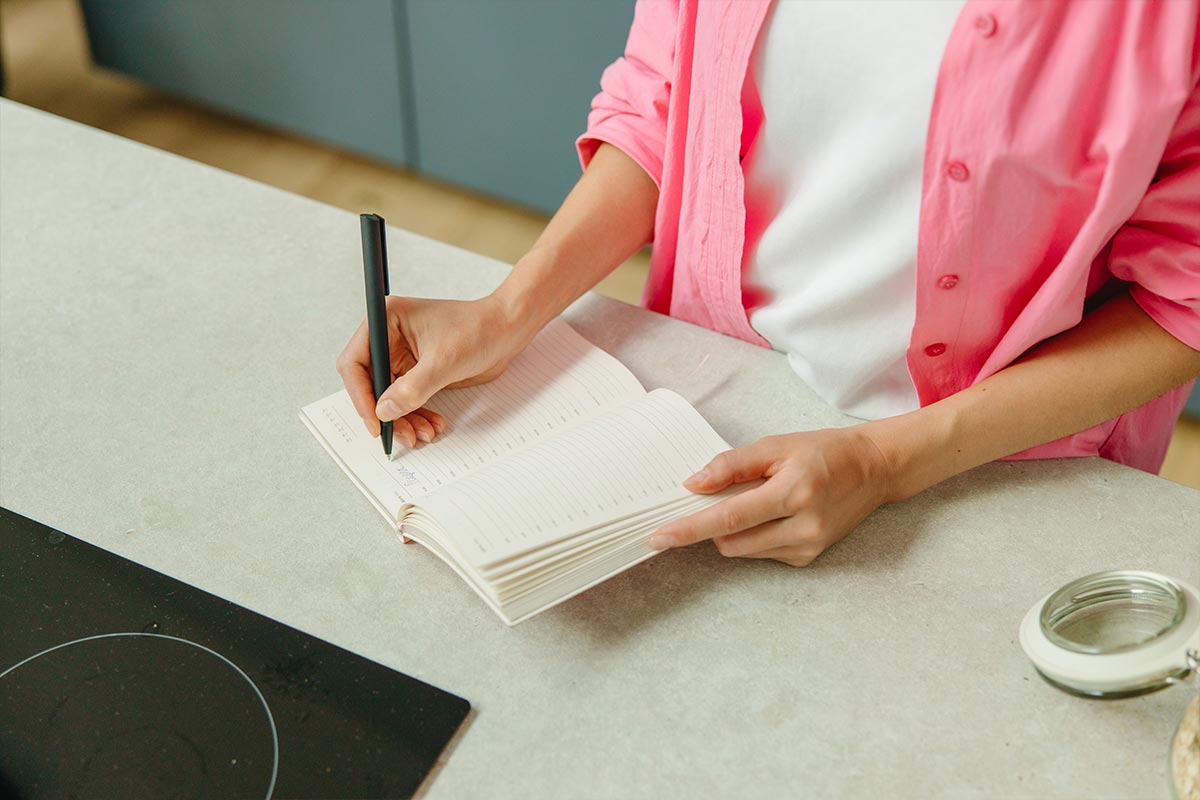
Before I write a single thing on a grocery list, I go through my own kitchen and write down what I already have. Sounds too simple to matter. It is the highest-value five minutes of the whole process.
Because here’s what I figured out: I was constantly re-buying things I already owned. I had, at one humbling point, three open bags of rice and four cans of black beans and an actual unopened box of pasta hiding behind the blender, and I’d just bought more of all of it because I never looked. The back of the pantry is where money goes to quietly die.
So now I do a quick scan, fridge and freezer and cupboards, and I plan a couple of meals around what needs using up. The wilting spinach becomes the thing I build Tuesday around. The half bag of frozen corn gets a job. It’s less shopping, less waste, and it forces me to actually eat the food I already paid for instead of letting it turn into a science experiment in the crisper drawer.
2. Build meals around a few cheap staples
This is the backbone of the whole thing. There’s a short list of foods that are cheap, filling, store forever, and go with almost anything, and if you build most of your week on top of them, your grocery bill basically can’t get out of control.
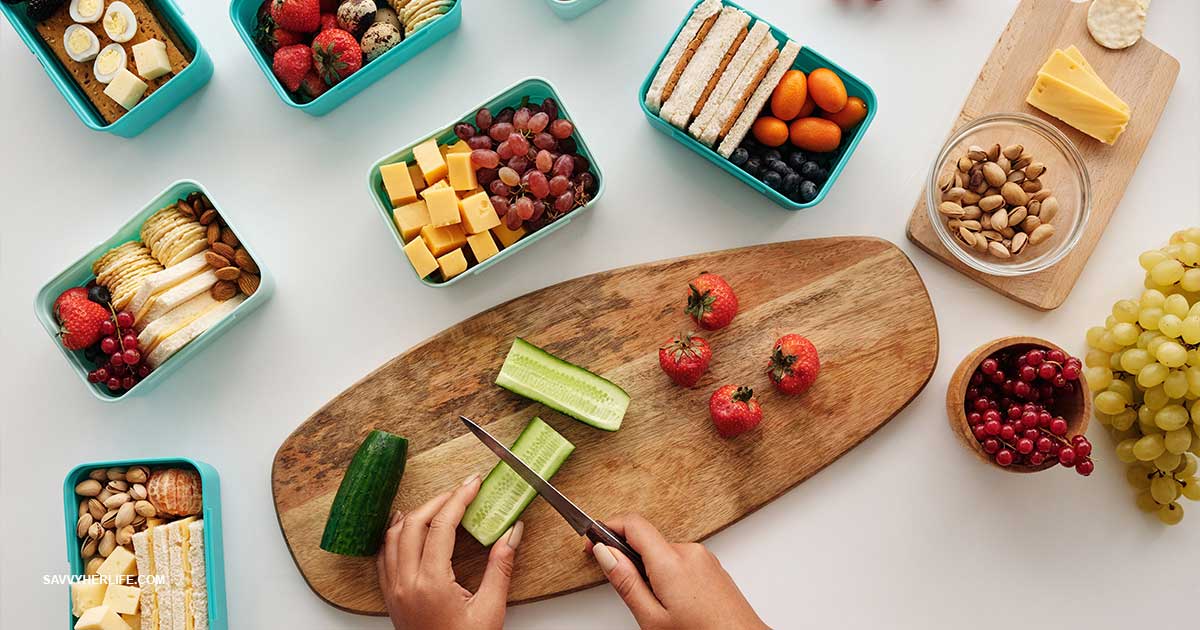
My core list is eggs, oats, rice, dried or canned beans, lentils, potatoes, frozen mixed veg, frozen berries, peanut butter, pasta, canned tomatoes, and a big bag of onions. Almost none of it is more than a couple of dollars and almost all of it lasts. Off that list alone you can make a genuinely huge number of dinners, and I’d guess seventy percent of what I eat in a week is some remix of those things plus whatever protein was cheap.
The point isn’t to eat rice and beans every night like you’re being punished. The point is that staples are your cheap, reliable base, and then you spend your actual money on a few things that make the base taste good. A jar of good salsa, a block of cheese, a bottle of hot sauce, one nice spice. The base is boring on purpose so the toppings can do the work.
3. Plan around the sales, not your cravings
This one took me the longest to accept because it requires giving up a little control, and I am a person who likes control. But it’s where the real savings live. Instead of deciding “I want chicken parm this week” and then paying whatever chicken costs, you flip it: you look at what’s actually on sale and cheap that week, and you build your meals around that.
Most stores have a weekly flyer, and the front page is almost always the loss-leader stuff, the things they’ve marked way down to get you in the door. That’s your menu. Chicken thighs are $1.49 a pound this week? Great, that’s two dinners. Whole chickens are cheap? You’re roasting one and living off it for days. The craving-first approach is what makes meal planning expensive, because the thing you’re craving is rarely the thing that’s cheap.
It feels like a small surrender and it pays for itself immediately. I shop mostly at Aldi, which keeps prices low across the board so I don’t have to chase flyers as hard, but even there I let the markdowns and the seasonal cheap produce steer the week. You eat what’s abundant. Abundant is cheap.
4. Use a loose theme-night framework
Deciding seven different dinners from a blank page every week is exhausting, and the exhaustion is what makes people quit planning and go back to takeout. So I stopped starting from blank. I use loose theme nights, which is just a gentle frame that cuts the number of decisions way down.
Mine are something like: pasta night, taco-ish night (which is really “beans and rice and whatever, in a tortilla”), soup or big-pot night, breakfast-for-dinner, a stir-fry-ish thing, leftovers night, and one wildcard. I’m not rigid about it. But knowing Monday is some kind of pasta means I’m not deciding whether to make pasta, only which one, and that tiny narrowing makes the whole plan take about ten minutes instead of an hour.
Theme nights also quietly save money, because each theme leans on cheap staples and lets you rotate in whatever was on sale. Taco night doesn’t care if it’s beans or the cheap ground turkey or last night’s leftover chicken. The frame stays, the cheap filling rotates through it.
5. Cook once, eat twice (plan your leftovers)
If I had to keep only one trick from this entire list, it might be this one, because it killed my takeout habit more than anything else. The plan isn’t seven separate dinners. It’s more like four things you cook, stretched across seven nights on purpose.
When I make a pot of chili or a tray of roasted veg and rice or a big soup, I make a deliberately huge amount, way more than one meal. Then “tomorrow’s dinner” is already done, sitting in a container, requiring zero decisions and zero money. That’s the whole game. The reason I used to order takeout four nights a week wasn’t hunger, it was that cooking from scratch every single night is genuinely a lot, and by Wednesday I had nothing left. Planned leftovers mean half my week’s dinners are already made before the week starts.
It also fixes the boredom problem, weirdly, because I’ll cook one big thing two ways. Big batch of roast chicken becomes tacos one night and a grain bowl the next and soup from the carcass on the weekend. Same cooking session, three different dinners, one grocery cost. My friend Maddie calls this “cooking in installments,” which is exactly right.
6. Write a real list and actually stick to it
The grocery list is where the plan turns into money saved or money lost. A vague list (“stuff for dinners, snacks, idk”) is just an invitation to wander the store and fill the cart with whatever looks good, which is how a $55 trip becomes a $95 trip. A list built straight off your meal plan is armor.
So I write down exactly what each planned meal needs, cross off anything my kitchen-scan said I already have, and that’s the list. Then the actual discipline part: I buy what’s on the list and I leave. The middle aisles, the endcaps, the “treat yourself” displays right at the register, all of it is engineered to make you buy things you didn’t plan to, the same way shopping apps are. I had to learn to treat the list as the rule, not a suggestion.
This is the exact same muscle as not impulse buying anything else, honestly, and the same thing that helped me there helps in the grocery store. If it’s not on the list, it waits. Most of the time the want quietly leaves by the time I get home, the same way it does with everything else I almost stopped impulse buying when I finally got a handle on it.
7. Check the unit price, not the sticker price
This is the boring math trick that saves more than it has any right to. The big number on the shelf tag is the sticker price. The tiny number, usually bottom corner, is the unit price, the cost per ounce or per pound or per 100 grams. That little number is the one that tells the truth.
Because the bigger package is usually cheaper per unit, but not always, and the brands know you assume it is. Sometimes the “family size” is secretly more per ounce than the regular. Sometimes the sale price on the small one beats the everyday price on the big one. The only way to actually know is to glance at the unit price and compare the same number across options. It takes two seconds once you’re in the habit.
This is also how you catch the shrinkflation thing, where the package looks the same size but quietly has less in it for the same price. The sticker price hides it. The unit price doesn’t. I now reflexively look at that little corner number on anything I buy regularly, and it’s caught me more “deals” that weren’t deals than I can count.
8. Go meatless a few nights a week
Meat is almost always the single most expensive thing in any meal, so the fastest way to drop a grocery bill is to lean on it less. I’m not telling you to go vegetarian. I’m telling you that if even three of your seven dinners are built on beans or lentils or eggs instead of meat, your bill drops noticeably and you probably won’t even clock it.
A pot of lentil soup, a big pan of fried rice with eggs and frozen veg, bean tacos, pasta with a tomato-and-white-bean sauce, a baked potato bar. These cost a fraction of anything meat-centered and they’re genuinely filling because beans and lentils are loaded with protein and fiber. The fiber is also why they fill you up, which means you eat less and snack less, which saves money on the back end too.
When I do buy meat, I treat it more like a flavoring than the main event. A little bit of cheap sausage chopped into a big pot of beans does more for the same money than a whole chicken breast sitting sadly in the middle of the plate. Stretch it, don’t center it.
9. Buy whole, not pre-cut and pre-portioned
You pay a real premium for someone else doing the work. Pre-cut fruit, bagged shredded cheese, pre-marinated meat, those little single-serving anything, washed-and-chopped salad kits, individual yogurt cups. Every one of them costs meaningfully more than buying the whole thing and doing five minutes of work yourself.
A block of cheese is cheaper than the same weight pre-shredded, and it melts better, and it doesn’t have the weird anti-caking powder on it. A whole pineapple is a fraction of the price of the plastic tub of pre-cut pineapple sitting right next to it. A big tub of plain yogurt costs less than the individual flavored cups and you can stir in your own frozen berries. The convenience tax is real and it’s everywhere, hiding in plain sight.
I won’t pretend I never buy the convenient version, because some weeks I’m drowning and pre-chopped onion is worth every penny of my sanity. But as a default, whole over pre-cut, and the savings stack up across a whole cart fast.
10. Shop the markdown and discount racks
Almost every grocery store has a sad little corner where they put stuff that’s near its sell-by date, dented cans, overripe produce, day-old bakery. Most people walk right past it. It is a gold mine and I will not be quiet about this.
Meat that’s marked down because it expires tomorrow is perfect if you’re cooking it tonight or tossing it straight in the freezer, which freezes the clock. The “too ripe” bananas are exactly what you want for banana bread or smoothies, and they’re like fifty cents. Bruised apples become applesauce. The marked-down bakery bread goes straight in the freezer and toasts up fine. None of it is bad food. It’s just food on a deadline, and if you have a plan for it, the deadline is free money.
I’ve gotten genuinely good cuts of meat for half price this way, planned the week’s dinners around whatever was marked down that day, and felt a little smug about it the entire time. Build a meal around the discount rack and you’re letting the store’s loss become your savings.
11. Keep a little price book in your phone
This sounds nerdier than it is. A price book is just a note in your phone where you jot down what you normally pay for the dozen or so things you buy all the time. Eggs, milk, your rice, your coffee, the pasta. That’s it.
The reason it’s powerful is that “on sale” is meaningless unless you know the normal price. Stores put a big SALE sticker on things that aren’t actually cheaper than usual all the time, betting you don’t remember. When you know in your bones that you normally pay $2.49 for the eggs, you instantly know whether $2.99 “special” is a joke (it is) or whether $1.79 is worth stocking up on. The number in your phone turns you from someone the store can fool into someone who knows.
Mine is genuinely just a messy Notes app list, no app, no spreadsheet, half the prices probably outdated. Doesn’t matter. Even a rough memory of normal prices means you stop falling for fake sales and you start recognizing the real ones, which is when you stock up. It’s the same noticing-where-the-money-goes habit from my no-spend challenge, just pointed at the grocery store.
12. Batch cook and use your freezer on purpose
Your freezer is a money machine and most people use it as a place for one sad bag of peas and some freezer-burned mystery from 2022. Used right, it’s how you buy cheap, cook in bulk, and never waste a thing.
When something’s on a great sale, I buy a lot and freeze it. Bread, cheese, meat, even milk freezes fine. When I cook, I make a double batch of anything freezable, soups, chili, pasta sauce, cooked beans, and freeze half in portions for the weeks I have no time or no will to cook. Future Me is always thrilled to find a homemade frozen dinner that cost a dollar and requires zero effort. It’s the cheapest insurance against ordering takeout that exists.
I also freeze the scraps that would otherwise rot. Onion ends and carrot tops and the chicken carcass go in a bag in the freezer, and when the bag’s full it becomes a pot of stock for free. Overripe fruit gets frozen for smoothies. Leftover herbs go in ice cube trays with a little oil. None of it is fancy. It’s just refusing to throw away food I already paid for.
13. Plan one “use it up” meal every week
Every single week, usually the night before I shop again, I make one meal whose entire job is to clean out the fridge. No recipe. No shopping. Just whatever’s left, thrown together into something edible.
This is the meal that saves the food that would otherwise become waste, and food waste is just money you put in the trash. The lonely half pepper, the last of the rice, the three sad mushrooms, the heel of the cheese. It all goes into a fried rice or a frittata or a “clean out the fridge” soup or a weird but functional grain bowl. Fried rice and frittatas exist specifically to absorb random leftovers, and they’re forgiving enough that you genuinely cannot mess them up.
Knowing I have a use-it-up night also makes me buy a little less, because I know the odds and ends will get eaten instead of multiplying in the drawer. The average household throws away a shocking amount of the food they buy, and an authority like the USDA’s work on food loss and waste will tell you it’s roughly a third of all food. A weekly clean-out meal is how you stop personally funding that statistic.
14. Shop once a week, and never hungry
Every extra trip to the store is an extra chance to impulse-buy, because nobody walks out of a grocery store with only the one thing they came for. Ever. So I shop once a week, with my list, and I do not go back for “just one thing” if I can help it, because just-one-thing always costs eleven dollars.
And the timing matters more than it should: never, ever shop hungry. There’s real psychology here, your hungry brain wants everything, and you’ll come home with three impulse snacks and a rotisserie chicken you didn’t need and a bag of chips you’ll regret. I learned to eat something first, even just a piece of toast in the car, before I walk in. Sounds small. Saves a shocking amount.
One planned trip, fed, with a list, in and out. The fewer minutes I spend wandering that store, the less money leaves my account. Shopping is not a hobby and the grocery store is not a fun place to hang out, no matter how nice the produce section smells.
15. Leave room for one easy meal so you don’t rage-order
Here’s the one most budget advice skips, and skipping it is why most budget meal plans die by week two. You have to build in an escape hatch. A plan with zero flexibility shatters the first hard day, and then you say forget it and order $30 of takeout out of spite.
So I keep one deliberately stupid-easy meal in the plan every week, plus a couple of emergency backups in the freezer and pantry. Frozen dumplings. A box of mac and cheese with frozen peas thrown in. Eggs on toast. Quesadillas. The whole point is that on the night I’m fried and would normally cave to DoorDash, there’s something I can make in six minutes that costs almost nothing. The easy meal isn’t a failure of the plan. It’s the part of the plan that keeps you from blowing the whole thing.
Treat yourself too, genuinely. Budget eating that feels like deprivation doesn’t last. Keep one thing you actually love in the rotation, the snack or the slightly nicer coffee or the Friday pizza you make at home for four dollars instead of ordering for twenty-four. The goal was never to suffer through every meal. It was to stop bleeding money on food I didn’t even enjoy.
The stuff I got wrong
Because I did not arrive here gracefully. I got most of this wrong first.
My first mistake was over-planning. I went full Sunday-meal-prep-influencer, lined up six gorgeous Pinterest recipes, bought every specialty ingredient, spent three hours cooking, and made enough food that I was sick of all of it by Wednesday and threw half of it out. Over-ambitious planning is just a fancier way to waste money than no planning at all. What works is boring and repetitive on purpose: a few simple meals, made in bulk, eaten more than once.
Second, I planned meals I had no real intention of cooking. On Sunday, calm and optimistic, I’d plan a Thursday dinner that involved marinating and forty minutes of active cooking, as if Thursday Me would have the energy for that. She never did. She ordered Thai. The fix was being brutally honest about my actual weeknights and planning easy, low-effort meals for the days I know I’ll be wiped, and saving anything ambitious for the weekend, if at all.
Third, and this one cost me for years, I treated leftovers like a sad consolation prize instead of the entire strategy. I’d cook exactly one portion, “fresh,” every night, which meant cooking every night, which is exhausting, which is why I quit and ordered out. The whole thing clicked the day I started cooking double and triple on purpose and calling the extra “tomorrow” instead of “leftovers.”
And one thing that isn’t really a mistake, just a thing I notice. I still have a spice rack full of single-use spices from my ambitious era. Sumac. Five kinds of dried chili. A jar of something called grains of paradise I bought for one recipe in 2023 and have never opened again. They sit there. I dust them. I keep thinking I’ll do a “use up the weird spices” month and I absolutely never will, and at this point they’re basically decor.
What actually changed
About three months into actually doing this, I did the same line-by-line Citibank review that horrified me into starting. The food number had gone from somewhere over $600 a month to around $250, most of it groceries, almost none of it takeout. I wasn’t eating worse. If anything I was eating better, more real food, more vegetables, way more actual home-cooked meals, because the planning made cooking feel possible instead of overwhelming.
The money was great, obviously. The trip fund I’d been failing to feed for a year finally started growing, fed partly by the takeout money I wasn’t lighting on fire anymore. But the thing that surprised me most was the mental part. That low background dread, the “what am I going to eat and how much is it going to cost” hum that ran under every single evening, just went quiet. I knew what dinner was. It was already half-made. It cost almost nothing. There was nothing to dread.
If you take one thing from all of this, take the cook-once-eat-twice idea and start there this week. Make one big thing on Sunday and let it cover two or three dinners. That alone breaks the every-night-cooking exhaustion that sends most people running back to takeout, and it’s the foundation the rest of meal planning on a tight budget sits on. You don’t have to overhaul your whole kitchen by Monday. Start with one big pot of something. For the wider money system this all feeds into, I laid out the rest in how to save money every month.
Questions people ask me
How do I start meal planning on a tight budget if I’ve never done it?
Start tiny. Don’t plan a whole perfect week. Pick three dinners for the next few days, build them around cheap staples you already like (pasta, eggs, beans, rice), check your own kitchen for what you already have, write one list off those three meals, and buy only that. Cook a double batch of at least one so you have a free leftover night. That’s it. Get comfortable with three meals before you try to plan seven, or you’ll burn out and quit the first week like I did.
How much should groceries cost for one person on a budget?
It depends a lot on where you live and what’s available, but for one person, somewhere in the $40 to $75 a week range is a realistic budget-conscious target in most places, and you can push the low end if you lean hard on staples and meatless meals. I get mine to around $55 most weeks shopping at Aldi. The exact number matters less than knowing your own number and watching it. Track what you actually spend for a few weeks first, then set a target slightly below it and work down from there.
What are the cheapest foods to build meals around?
Eggs, oats, rice, dried and canned beans, lentils, potatoes, pasta, frozen mixed vegetables, frozen fruit, canned tomatoes, peanut butter, onions, and in-season produce. They’re cheap, they store well, they’re filling, and they go with almost everything. Build most of your meals on top of that base and spend your actual money on a few flavor things (cheese, salsa, a good sauce, spices) that make the cheap base taste like something you want to eat.
How do I meal plan without getting bored of the same food?
Two tricks. First, cook one base ingredient several different ways instead of eating the identical meal twice, so a batch of roast chicken becomes tacos, then a grain bowl, then soup. Second, keep your cheap staple base boring on purpose and rotate the flavors on top: the same beans and rice become Mexican-ish one night with salsa and Mediterranean-ish another with lemon and herbs. The base stays cheap and constant, the seasoning changes, and your brain reads it as variety.
Is it cheaper to meal plan or just buy what I need each day?
Meal planning is almost always cheaper, and it’s not close. Shopping daily or grabbing things as you go means more trips, more impulse buys, more food that rots before you use it, and far more takeout on the nights you didn’t plan. Planning the week, shopping once with a list, and cooking in batches cuts all four of those leaks at once. The daily approach feels flexible but it’s where most of the money quietly disappears.
How do I stop wasting food and money on groceries that go bad?
Plan a weekly “use it up” meal whose only job is to eat the odds and ends before they rot, like a fried rice, frittata, or clean-out-the-fridge soup. Shop your own kitchen before you buy more. Buy only what your meal plan actually calls for instead of aspirational produce you “should” eat. And use your freezer on purpose, freezing bread, cheese, extra cooked meals, and overripe fruit before they go off. Most grocery money lost to waste comes from buying more than you’ll realistically cook, so plan first, then buy exactly that.
One last thing
Anyway. It’s Sunday, which used to be the day I dreaded planning and is now genuinely kind of my favorite, because ten minutes of deciding buys me a whole week of not deciding. There’s a pot of something on the stove that’ll be three of this week’s dinners. The trip fund is growing on the takeout money I’m not throwing away. The weird spices are still sitting there judging me, unopened, beautiful, useless.
Okay. The big pot needs stirring, and then I’m done thinking about food until next Sunday, which is the whole point.
👤 About the Author
Hi, I’m Millie — a college student writing about real life on a budget, from money to self-care to making a rental feel like home. I share what actually works when you’re broke, busy, and trying to be a little smarter with your money anyway. You’ll find more honest budget living and money tips across SavvyHerLife.
This post was researched and drafted with AI assistance, then reviewed and personally edited by Millie. All stories, brand mentions, dollar amounts, and recommendations are based on real experience.
1 thought on “Meal Planning on a Tight Budget (15 Tricks That Work)”