
🎯 Quick Takeaways
- ✅ Cheap meal prep ideas start with cheap base ingredients: rice, beans, lentils, eggs, oats, frozen veg, and whatever produce is on sale. Build everything around those
- ✅ You don’t need matching glass containers or a five-hour Sunday. Prep a couple of components, not fourteen full meals, and use the mismatched tupperware you already own
- ✅ Prep the building blocks (a pot of rice, a tray of roasted veg, a protein) and mix-and-match them into different meals all week so you don’t get sick of eating the same thing
- ✅ Your freezer is the whole secret. Cook double, freeze half, and future-you has a homemade meal for the cost of the takeout you didn’t order
- ✅ The point isn’t Instagram-perfect containers. It’s cooking what you already bought so it doesn’t rot, and killing the 8pm takeout habit that quietly wrecks a food budget
- ✅ Start with just lunches, or just one big-batch dinner. A small prep you actually repeat beats a giant one you do once and quit
📑 Table of Contents
- Where to start with cheap meal prep ideas
- Cook a big pot of a cheap base
- Batch a pot of beans or lentils
- Roast a tray of whatever veg is cheapest
- Prep one budget protein in bulk
- Make one big-batch soup, chili, or stew
- Set up overnight oats for cheap breakfasts
- Build a mix-and-match bowl formula
- Freeze half of everything you cook
- Prep components, not full plated meals
- Turn leftovers into a second, different meal
- Make a cheap pasta bake that reheats well
- Wash and chop produce so it gets eaten
- Pack grab-and-go lunches to kill takeout
- Portion your own snacks instead of buying single-serve
- Keep one cheap emergency pantry meal ready
- The stuff I got wrong
- What actually changed
- Questions people ask me
For a long time I thought meal prep was a whole lifestyle I couldn’t afford, all fourteen matching glass containers lined up in a fridge, chicken and broccoli and rice weighed out to the gram, a Sunday that vanished into cooking. The videos made it look like a part-time job with really good lighting, and mine looked like me eating cereal for dinner because I’d let a bag of spinach turn to soup in the drawer again. So I stopped trying to copy the aesthetic version and figured out the cheap, lazy one instead. I started leaning on cheap meal prep ideas because I was hemorrhaging money on takeout I ordered out of pure “there’s nothing to eat” despair, even though my fridge was technically full, just full of ingredients I never turned into actual food. And once I cracked it, my grocery money finally started feeding me instead of the trash.
Here’s the part that surprised me. The prep that actually worked cost almost nothing and took almost no time. A big pot of rice. A tray of roasted vegetables. A batch of beans. None of it was cute, all of it got eaten, and the week I first did it properly I didn’t order takeout once, which for me was basically a miracle.
The expensive version of meal prep is mostly gear. Somebody figured out that tired, broke people will buy containers and gadgets and meal-kit subscriptions to feel organized about food, and it works on us, because I have absolutely bought the containers.
So this is the real, cheap routine. The budget building blocks I actually prep most weeks so I eat what I bought, spend way less, and stop caving to the DoorDash app at 8pm, none of which need special equipment or a lost Sunday.
Where to start with cheap meal prep ideas
The first mistake, and I made it for months, is thinking meal prep means cooking every meal for the week in one exhausting marathon. You watch someone portion out fifteen identical containers, decide that’s the assignment, spend a whole Sunday and a small fortune doing it, burn out by hour three, and then never do it again. That version is expensive, miserable, and the reason most people quit. It was never the only way to do it.
The actual place to start is with cheap base ingredients and just a little prep. Rice, beans, lentils, eggs, oats, frozen vegetables, and whatever fresh produce is cheapest that week, these are the foundation, because they cost almost nothing and stretch forever. You prep a few of these building blocks, not full plated meals, and then you assemble them into different things all week. Meal prep isn’t a marathon, it’s just doing a bit of the boring cooking ahead of time so weeknight-you has something to work with. This all sits right on top of my meal planning on a tight budget, which is the deciding-what-to-eat step, where prep is the cooking-ahead step that makes the plan actually happen.
I keep calling it “meal prep” but the honest thing I’m really doing is “making sure the food I bought becomes food I eat.” That reframe took the pressure off. I didn’t need a fridge full of aesthetic containers. I needed the spinach to get cooked before it liquefied, and a lunch ready so I’d stop buying one. When you shop right first, prep is easy, which is why the how to save money on groceries stuff comes before this, and prep is where those cheap groceries turn into actual meals.
Cheap meal prep ideas: the 15 that actually work
1. Cook a big pot of a cheap base
Start with the cheapest, most useful thing you can make: a big pot of a starchy base. Rice is the classic, a giant bag costs almost nothing and lasts forever, but it can also be pasta, potatoes, or couscous, whatever’s cheapest where you shop. Cook a big batch at the start of the week and you’ve got the foundation of a dozen meals.
This one costs pennies per serving and does more heavy lifting than anything else I prep. A pot of rice becomes a stir-fry base on Monday, the bottom of a burrito bowl Wednesday, and fried rice with a scrambled egg on Friday when there’s nothing else left. I make enough to last several days, keep it in the fridge, and build around it. The whole point of a cheap base is that it turns tiny amounts of everything else into a full, filling meal.
Cook the base first, in bulk, because everything else you prep is going to sit on top of it. It’s the cheapest calories in the whole plan.
2. Batch a pot of beans or lentils
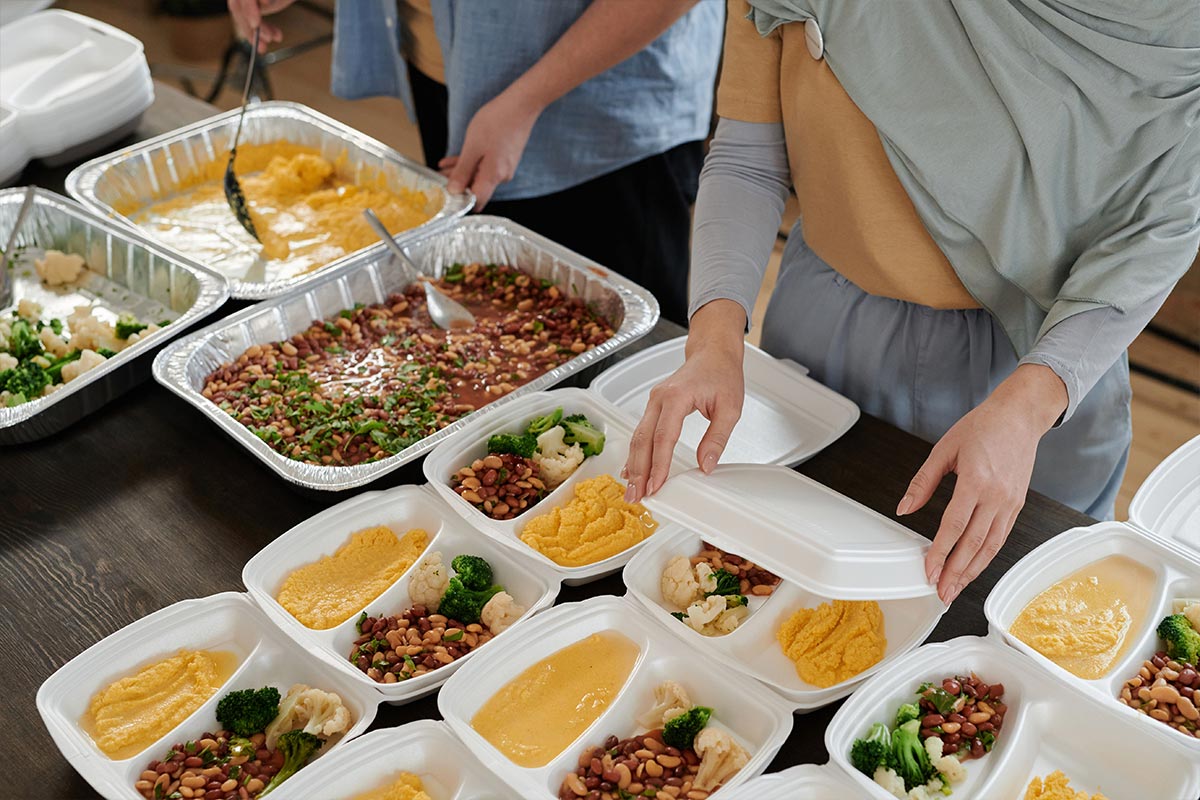
If you want cheap protein that fills you up, beans and lentils are unbeatable, and prepping a big batch is one of the best-value things you can do all week. Dried are cheapest by a mile, but even canned are cheap, and a pot of either gives you protein for days at a fraction of the cost of meat.
I cook a big pot of lentils or a bag of dried beans and use it everywhere: into a soup, over the rice, mashed into a taco filling, thrown in a salad. A pound of dried lentils costs about the same as a single fast-food side and turns into something like ten servings of actual protein. When money’s especially tight, a beans-and-rice week is genuinely the cheapest way I know to eat and still feel full, and it’s a big part of why my grocery bill dropped once I got serious about the things to stop buying to save money, expensive convenience protein being high on that list.
Batch the cheap protein once and lean on it all week. Beans and lentils are the frugal-cooking backbone for a reason, and they reheat and freeze beautifully.
3. Roast a tray of whatever veg is cheapest
Vegetables are where a lot of budget eaters give up, either because fresh feels expensive or because it goes bad before they cook it. The fix is one big tray of roasted veg at the start of the week, made from whatever’s cheapest, on sale, or already about to turn in your fridge.
I grab whatever’s cheap, carrots, onions, a bag of frozen broccoli, that sad zucchini that needs using, toss it all on a sheet pan with a little oil and salt, and roast the whole tray at once. It takes five minutes of effort and the oven does the rest while I do other things. Then that roasted veg goes on the rice, in the bowls, next to the eggs, all week. Frozen vegetables are your secret weapon here, cheap, already cut, never go bad, and honestly fine once roasted. Using up the produce before it dies is half of what saves the money, the same waste-killing logic that runs through my whole sunday reset routine on a budget.
Roast one big tray of the cheapest veg you can find and let it feed you all week. Cheap, mostly hands-off, and it rescues the produce before it rots.
4. Prep one budget protein in bulk
Beyond beans, pick one cheap animal protein and prep a big batch of it, if it fits your budget and your diet. Eggs are the cheapest and most flexible, hard-boil a bunch and you’ve got instant protein for salads, snacks, and lazy breakfasts. Chicken thighs are cheaper than breasts and more forgiving. Ground meat stretches a long way when you pad it with beans or lentils.
The trick with a budget protein is to prep it plain and season it differently through the week, so it doesn’t feel like the same meal on repeat. I’ll bake a batch of chicken thighs with just salt and pepper, then one night it’s over rice with soy sauce, another it’s shredded into a wrap, another it’s chopped into a pasta. Buying the cheaper cut, in a bigger pack, and stretching it across several meals is how you get real protein into a tight budget without blowing it. Watching the unit price on meat is the single biggest grocery lever I talk about in how to save money on groceries.
Pick one cheap protein, prep it in bulk and plain, then dress it up differently each day. That’s how a budget protein stretches without getting boring.
5. Make one big-batch soup, chili, or stew
Nothing stretches a food budget like a big pot of soup, chili, or stew, because it’s designed to feed a lot of people cheaply, and you can make a huge batch for a few dollars. It’s the single most cost-effective prep in this whole list per serving.
Once a week I make one big pot of something, a lentil soup, a bean chili, a veg-and-whatever stew, using cheap pantry stuff and whatever needs using up. A big pot like that gives me lunches or dinners for days, tastes better on day two anyway, and freezes perfectly for later. The base is almost always beans or lentils plus the cheap veg plus some broth and spices, so it costs next to nothing and makes a genuinely satisfying, warm meal. It’s the ultimate use-it-up dish too, the place where the odds and ends of the week’s produce go to become dinner instead of trash.
Make one big pot of something soupy every week. It’s the cheapest filling meal there is, it freezes, and it’s where your almost-dead vegetables go to be useful.
6. Set up overnight oats for cheap breakfasts
Breakfast is where a lot of money quietly leaks out, the $4 coffee-shop pastry, the drive-thru, the “I’ll grab something.” A giant container of plain oats costs almost nothing and prepping overnight oats gives you a cheap, filling breakfast for the whole week with about two minutes of effort.
I make a few jars at once, just oats, milk or water, and whatever cheap add-in I’ve got, a spoon of peanut butter, a handful of frozen berries, a little cinnamon, and leave them in the fridge. In the morning breakfast already exists, which is the entire point, because a breakfast that already exists is a breakfast I don’t buy on the way somewhere. At maybe fifty cents a jar versus five dollars for something out, the math is almost aggressive. Killing the bought-breakfast habit was one of the first swaps in my how to save money every month.
Prep a few jars of overnight oats and stop buying breakfast. It’s one of the cheapest, easiest prep wins, and it kills a spending habit most people don’t even notice.
7. Build a mix-and-match bowl formula
The reason people get sick of meal prep and quit is eating the identical container five days running. The fix is to prep versatile components and combine them differently each day, using a simple bowl formula: a base, a protein, a vegetable, and something to bring it to life.
Once you’ve got the rice, the beans, the roasted veg, and maybe the chicken from the earlier steps, you have the makings of totally different meals depending on how you combine and flavor them. Rice plus beans plus roasted veg with salsa and hot sauce is a burrito bowl. The same components with soy sauce and a fried egg is an Asian-ish rice bowl. Add a squeeze of lemon and some olive oil, it leans Mediterranean. Same cheap building blocks, five different meals, because the flavor at the end is what makes it feel new. A few cheap sauces and spices are the highest-value thing in the whole system.
Prep flexible parts, not fixed meals, and remix them into a different bowl each day. Variety is what keeps cheap meal prep from becoming a punishment you abandon.
8. Freeze half of everything you cook
Your freezer is the most underused money-saving tool in the kitchen, and using it well is what turns a good prep week into a system that feeds you for a month. The rule is simple: whenever you cook a big batch of something, freeze half of it before you’re sick of it.
Almost everything freezes better than people think, the soup, the chili, the beans, the cooked rice, even portions of the baked protein. So when I make that big pot of chili, half goes in the fridge for this week and half goes into the freezer in single portions, and three weeks later, on a night I’m exhausted and would absolutely have ordered takeout, there’s a homemade meal waiting for the cost of nothing extra. That’s the whole trick, cook once, eat twice, weeks apart. It builds up a little stash of “emergency” home meals that are the actual antidote to the 8pm delivery order.
Cook double and freeze half, every single time. A full freezer of portioned meals is a broke person’s insurance policy against expensive, tired-night takeout.
9. Prep components, not full plated meals
If there’s one mindset shift that makes cheap meal prep sustainable, it’s this: prep the components, not fully assembled meals. Instead of building five identical finished plates on Sunday, you prep the parts, the cooked base, the protein, the veg, a sauce, and assemble fresh each day.
This is the difference between prep that lasts and prep that dies by Wednesday. Fully assembled meals get boring and soggy and you stop wanting them. Loose components stay flexible, so you can eat a bowl one day, a wrap the next, throw the protein in a salad the day after, and nothing feels repetitive or sad. It’s also more forgiving, because if plans change and you eat out one night, nothing goes to waste, the components just roll into the next day. Prepping this way is honestly less work than plating full meals, and it fits real life so much better.
Prep the parts and assemble later. Flexible components beat rigid finished meals for a real, unpredictable week, and they waste far less.
10. Turn leftovers into a second, different meal
Leftovers get a bad reputation, but reinventing them is one of the most powerful cheap meal prep moves there is, because it means you’re getting two different meals out of one cooking session. The trick is to transform them into something that doesn’t feel like the same dinner again.
Last night’s roast chicken becomes today’s chicken fried rice or a quesadilla. Extra rice becomes tomorrow’s stir-fry or a fritter. Leftover roasted veg gets blended into a soup or folded into a frittata. A little imagination turns “leftovers again” into a genuinely new meal, and it means basically nothing gets thrown away, which is where a lot of the savings actually live, because wasted food is wasted money you already spent. I plan for this now, deliberately cooking a bit extra so there’s something to remix, instead of just reheating the identical plate and resenting it.
Reinvent leftovers into a new meal instead of just reheating them. Two meals from one cook is the frugal home cook’s whole superpower, and it means nothing rots.
11. Make a cheap pasta bake that reheats well
Some dishes are just built for cheap prep, and a big pasta bake is near the top of the list: cheap ingredients, feeds a crowd or one person for days, and reheats better than almost anything. It’s comfort food that happens to be extremely budget-friendly.
A box of pasta, a jar or can of tomato sauce, whatever cheap veg or beans I’ve got, maybe a little cheese on top, baked in one dish, and that’s several days of dinners for a handful of dollars. It holds up in the fridge, reheats in minutes, and honestly tastes as good on day three. I’ll bulk it out with lentils or extra vegetables to stretch it further and sneak in some nutrition, and the whole thing costs less than a single takeout order while feeding me most of the week. It’s the kind of humble, filling, unglamorous meal that makes budget eating genuinely comfortable instead of a chore.
Bake one big cheap pasta dish and coast on it for days. Filling, forgiving, reheats perfectly, and costs less than one delivery order to feed you all week.
12. Wash and chop produce so it gets eaten
The saddest waste of money is the produce you bought with good intentions and then let rot untouched in the drawer, and the fix is almost stupidly simple: wash and chop it as soon as you get home, so it’s ready to grab. Prepped produce gets eaten. Whole produce hiding in a bag often doesn’t.
When I get back from the store, I spend ten minutes washing and cutting the vegetables and fruit before I put them away, carrots into sticks, peppers sliced, berries washed, greens ready to go. That tiny bit of upfront work means that all week, the healthy cheap option is the easy one, already prepped and staring at me, instead of a whole vegetable I have to deal with when I’m tired and hungry. The amount of money I used to throw away in liquefied spinach and forgotten peppers was genuinely embarrassing once I actually noticed it, and this one habit killed most of that waste.
Prep your produce the moment you get home. Ten minutes of washing and chopping is what stands between the food you bought and the food you actually eat.
13. Pack grab-and-go lunches to kill takeout
The single biggest money leak cheap meal prep fixes is the bought lunch, the daily $12 to $15 that vanishes so quietly you barely register it, until you add it up over a month and feel slightly sick. Prepping grab-and-go lunches is the direct antidote, and it’s where the savings show up fastest.
Using the components I’ve already prepped, I pack lunches the night before, or portion them out at the start of the week, so there’s always something ready to grab on my way out. A bowl of rice and beans and veg. A wrap. Leftover pasta bake. It takes almost no extra effort once the prep’s done, and it means I’m not standing somewhere at noon paying restaurant prices because I’ve got nothing with me. Bringing lunch instead of buying it is easily one of the highest-return frugal habits there is, right up there with the coffee swap in my frugal living tips for beginners.
Pack the lunch so you don’t buy the lunch. It’s the fastest, most obvious payoff of the whole system, and the daily savings stack up shockingly fast.
14. Portion your own snacks instead of buying single-serve
Single-serve snacks are one of the sneakiest markups in the grocery store, you pay a big premium for the little bags and the convenience packaging. Portioning your own from a big value bag is cheap meal prep for the in-between moments, and it saves more than people expect.
Instead of a box of individually wrapped anything, I buy the big bag and portion it myself into small reusable containers or little baggies, crackers, nuts, popcorn, whatever. Same snack, fraction of the price, and it stops me buying overpriced vending-machine stuff because I’ve already got something with me. I’ll portion out a week of snacks in a few minutes while the rice cooks, and it kills both the single-serve markup and the impulse convenience-store spend. It’s a small thing, but small things repeated daily are the entire game, which is the whole idea behind not letting little purchases run the show, like in my how to stop impulse buying.
Buy big and portion your own snacks. You’re paying a premium for those little bags, and undoing that with a few minutes of prep is free money.
15. Keep one cheap emergency pantry meal ready
Even with the best prep, some nights everything falls apart, you’re exhausted, the fridge is bare, and the delivery app is right there being tempting. The defense is keeping the ingredients for one cheap, fast pantry meal on hand at all times, so there’s always a homemade option between you and a $30 order.
Mine is usually pasta with canned tomatoes and garlic, or a can of beans dumped over the emergency rice with hot sauce, or eggs on toast, the kind of thing I can make from shelf-stable stuff in under ten minutes with zero energy. The whole reason it works is that it removes the “there’s literally nothing to eat” excuse that leads to ordering out. Keeping a couple of these no-brainer meals stocked in the pantry has saved me more takeout money than almost anything, because the weak, tired moment is exactly when the budget usually dies, and this is the thing that catches it. It’s the food version of the emergency cushion I talk about in how to build an emergency fund, just for dinner.
Always keep the makings of one lazy pantry meal on hand. It’s the thing that saves you on the exact night your willpower and your fridge are both empty.
The stuff I got wrong
Because I got this wrong plenty of times before any of it stuck.
My first and biggest mistake was going all in on the full marathon prep. I did the whole Sunday, fourteen containers, every meal for the week portioned out like a meal-kit ad, and by Wednesday I was so sick of the identical lunch that I ordered takeout anyway, which meant I’d spent a whole Sunday and a pile of money to still not save any money. Prepping components instead of finished meals fixed that completely, but it took me a while to unlearn the container-army version.
Second, I bought way too much fresh produce with big healthy intentions and then let a heartbreaking amount of it rot. Bags of spinach, whole cucumbers, herbs I used once, all liquefying in the drawer while I ordered food because “there was nothing to eat.” Leaning on frozen veg and washing-and-chopping the fresh stuff the day I bought it killed most of that waste, but the money I threw away in slimy produce before I figured that out still stings a little.
Third, I ignored my freezer completely for years. I’d cook a big batch, eat it until I was tired of it, and let the rest go bad in the fridge, never once thinking to freeze half for later. Learning to freeze single portions turned my prep from a one-week thing into a rolling stash of emergency meals, and it’s probably the single biggest upgrade I ever made to the whole system.
And one thing that isn’t really a mistake, just a small ongoing embarrassment. During my most ambitious meal-prep phase, fully convinced the missing piece was proper equipment, I bought a set of ten matching glass meal-prep containers, the good ones with the compartments and the leakproof lids, because organized-me was going to become a person with a color-coordinated fridge. I used maybe three of them regularly. The other seven mostly live at the back of a low cabinet, lids in a separate drawer that I can never fully match to the bottoms, and every so often I open that cabinet, feel a little pang, and shut it again. I do most of my actual prep in the same mismatched thrifted tupperware I’ve had since freshman year. The nice containers and I have an understanding. We don’t discuss it.
What actually changed
The first thing I noticed, a few weeks into doing the cheap version properly, was that my takeout spending basically fell off a cliff. That was where the real money was hiding all along, not in my grocery bill but in the delivery orders I placed because my full fridge somehow never contained a meal. Once there was always something ready to eat, the 8pm DoorDash reflex just faded, and the money that used to vanish into delivery fees and tips quietly started landing in my trip fund instead.
The waste changed too, which surprised me. I went from throwing out slimy produce almost every week to wasting almost nothing, because now the food I bought actually became meals instead of a guilt pile in the crisper drawer. I wasn’t spending less on groceries, exactly. I was just finally eating everything I bought, which turned out to be worth a lot of money on its own.
If you take one thing from all of this, take the components-not-marathons rule and start small this week: pick just one base and one protein, a pot of rice and a batch of beans, say, prep only those, and build a few different meals around them before you try to do anything bigger. That tiny, repeatable version is the whole secret to cheap meal prep ideas that actually last, because a small prep you keep doing beats a giant one you burn out on and quit. The shopping half of all this, the part that makes the prep cheap in the first place, lives in my how to save money on groceries.
Questions people ask me
What are the cheapest meal prep ideas for the week?
The cheapest meal prep is built on cheap base ingredients: rice, dried beans, lentils, eggs, oats, and frozen vegetables. A big pot of rice, a batch of beans or lentils, a tray of roasted frozen veg, and some hard-boiled eggs can be mixed and matched into bowls, wraps, and plates all week for just a few dollars. Add one big-batch soup or chili and a pasta bake and you’ve got a full week of meals for less than a couple of takeout orders. Beans and rice is genuinely the cheapest filling meal there is.
How do I meal prep on a very tight budget?
Shop first for the cheapest staples (rice, beans, lentils, oats, eggs, frozen veg, whatever produce is on sale), then prep components rather than fancy full meals. Cook a big base, batch a cheap protein, roast a tray of veg, and make one big-batch soup, then combine them into different bowls all week so you don’t get bored. Freeze half of everything so nothing goes to waste, and always keep the ingredients for one lazy pantry meal on hand to avoid takeout. The tighter the budget, the more you lean on beans, lentils, and your freezer.
Do I need special containers to meal prep?
No. Any containers you already own work fine, including mismatched thrifted tupperware, old takeout containers, jars, and freezer bags. The matching glass container sets look nice but they’re an expense, not a requirement, and plenty of people (me included) buy them and then barely use them. Don’t let “I don’t have the right containers” stop you from starting. Prep the food, put it in whatever seals, and worry about aesthetics never.
How long does prepped food actually last?
Most cooked meal prep keeps about three to four days in the fridge, and much longer frozen, which is why freezing half is such a good habit. Cooked rice, beans, roasted veg, soups, and baked proteins all hold up well for a few days refrigerated and freeze nicely for weeks. When in doubt, check a reliable source like the government’s cold food storage charts rather than guessing, since eating spoiled food to save money is a false economy. If you prep more than a few days’ worth, freeze the extra instead of leaving it in the fridge.
How do I keep meal prep from getting boring?
Prep flexible components instead of identical finished meals, then change the flavors. The same rice, beans, protein, and veg become a burrito bowl with salsa, an Asian-style bowl with soy sauce and a fried egg, or a Mediterranean bowl with lemon and olive oil, just by switching the sauce and seasonings at the end. A few cheap sauces, spices, and condiments are the highest-value thing you can buy for variety. Reinventing leftovers into new meals helps too, so nothing feels like the same dinner twice.
Does meal prep actually save money?
Yes, and the savings mostly come from two places people underestimate: not buying takeout and not wasting food. When there’s always something ready to eat, the expensive 8pm delivery order stops happening, and when you actually cook what you bought instead of letting it rot, your grocery money goes much further. For most people the takeout reduction alone pays for the whole habit. Cooking cheap staples in bulk and freezing extras stretches a small grocery budget across far more meals than buying convenience food or eating out.
One last thing
Anyway. There’s a pot of lentils cooling on the stove as I write this, half of it already destined for the freezer, and the fancy glass containers are still mostly asleep in the low cabinet where they belong. My lunch tomorrow is a bowl of rice and beans and roasted carrots that cost me maybe a dollar, and I haven’t opened the DoorDash app in two weeks, which honestly feels like the real win.
Okay. The lentils are cool enough now. I’m going to go portion them out before I get distracted and let them sit there till they’re questionable.
👤 About the Author
Hi, I’m Millie — a college student writing about real life on a budget, from money to food to making a rental feel like home. I share what actually works when you’re broke, busy, and trying to feed yourself without ordering takeout every night. You’ll find more honest budget living tips across SavvyHerLife.
This post was researched and drafted with AI assistance, then reviewed and personally edited by Millie. All stories, brand mentions, dollar amounts, and recommendations are based on real experience.