
🎯 Quick Takeaways
- ✅ Good home office ideas on a budget are almost all removable: a thrifted desk, a secondhand chair, warm task lighting, and one plant do most of the work, and none of it needs a drill or a spare room
- ✅ You don’t need a whole room. A corner of your bedroom or living room, zoned with a small rug and a shelf, is a real workspace once you set it up on purpose
- ✅ The two changes that matter most cost the least: warm task lighting instead of the overhead, and a clear desktop. Both are basically free and both make the corner feel like a real office
- ✅ Cheap doesn’t have to mean bad for your neck. A few books or a $10 stand to raise the laptop, plus a separate keyboard, saves your posture for almost nothing
- ✅ A “shut down” ritual is the free upgrade nobody talks about. When your office is three feet from your bed, you need a way to make work actually end
- ✅ Start with one thing this week. A table you already own plus a warm lamp is a working corner for under $10
📑 Table of Contents
- Where to start with home office ideas on a budget
- Carve out a corner (you don’t need a spare room)
- Thrift a desk or use a table you already own
- Get a secondhand chair and add a cushion
- Use warm task lighting instead of the overhead
- Tame the cables for a few dollars
- Go vertical with cheap shelves or a pegboard
- Make a DIY pinboard or mood board
- Add one plant
- Hang cheap art or free printables
- Raise your laptop with a stack of books
- Keep the desktop clear with a tray and a caddy
- Use a small rug to zone the office corner
- Add a laptop stand and a separate keyboard for your neck
- Build a shut-down ritual so work actually ends
- Add cozy budget touches, a candle and a good mug
- The stuff I got wrong
- What actually changed
- Questions people ask me
My whole apartment is basically one room with ambitions, so when I needed somewhere to study and do the little bit of remote work that keeps feeding my Costa Rica trip fund, there was no spare room to turn into an office. There was a corner. Between my bed and the window, next to the radiator that clanks every morning at 6, a three-foot stretch of floor that was mostly holding a laundry basket and a plant I kept forgetting to water. That’s where the office went. And figuring out real home office ideas on a budget, the renter kind that don’t need a spare room or a drill or money I don’t actually have, is how that clanky little corner became the place where I get things done instead of hunching over my laptop in bed until 1am with my neck at a horrible angle.
The part that surprised me was how little it cost. The whole setup, spread over about a month, came in under $50, and almost none of it is permanent. A $15 desk off Facebook Marketplace. A secondhand chair with a cushion I already owned. A warm bulb in a lamp I already had. A cheap shelf, one plant, a small rug to mark off the corner. Nothing fancy, all of it comes back out when I move, and the corner went from a spot I avoided to the one place I actually like sitting.
The expensive version of a home office is mostly furniture you don’t need and a room you don’t have. As a renter in a small apartment, I can’t knock out a wall or claim a bonus room, and honestly I wouldn’t want to sink real money into a place I don’t own. The cheap, removable, small-space tricks are the only ones that make sense, and they turn out to be the ones that do the most visible work anyway.
So this is the actual, renter-friendly routine. The cheap and removable things I did to turn a corner of my bedroom into a workspace that looks decent and, more importantly, works, none of which need permission, power tools, or a security deposit you’re happy to lose.
Where to start with home office ideas on a budget
The first mistake, and I made it while standing in that corner holding a laundry basket, is thinking you need a room. You picture the Pinterest office with the built-in shelves and the big window and the door that closes, decide you don’t have that, and give up before you start. But a workspace isn’t a room. It’s a surface, a chair, decent light, and a boundary that tells your brain “this is where work happens.” All four of those fit in a corner.
The actual place to start is with the boring bones first, the desk, the chair, and the lighting, because those three decide whether you can sit there for two hours without wanting to die, and everything pretty comes after. Get a stable surface at the right height, something to sit on that doesn’t wreck your back, and a warm light aimed at your work, and you have a functioning office. The plant and the pinboard and the cute mug are the finishing layer. This is the same corner-not-a-room thinking that runs through my whole approach to apartment decorating on a budget, just aimed at the little slice of floor you work from.
I keep writing “home office” but it’s really a corner of my bedroom wearing a name tag that says office. Once I stopped waiting for a real room and started treating the corner like it counted, the whole thing got easy, and cheap. Because a corner you’ve set up on purpose beats a spare room you never finish.
Home office ideas on a budget: the 15 that actually work
1. Carve out a corner (you don’t need a spare room)
If you do only one thing, do this: pick the corner. Not the vague plan to “work somewhere,” an actual spot. A corner of the bedroom, the end of the living room, a nook by a window. The point is that your brain needs a fixed place it associates with work, and floating around the apartment with a laptop is why you end up answering emails from bed at midnight.
I picked the corner by my window because it gets a little morning light and it was the only spot not already doing another job. Then I gave it edges, a small rug underneath and a shelf above, so it reads as its own zone instead of a random patch of bedroom. You want the corner to feel a bit separate from your sleep or lounge space, even if separate just means a rug and a lamp marking the line. If your corner happens to live in your bedroom like mine does, the same small-space rules from my small bedroom decor ideas on a budget keep the workspace from swallowing the whole room.
Claim one specific corner and give it edges. A workspace your brain recognizes beats a whole room you’re waiting to have, and it costs nothing to decide.
2. Thrift a desk or use a table you already own
You do not need to buy a “desk.” You need a stable, flat surface at roughly the right height, and a lot of things you already own qualify. A dining table you never eat at, a console table, a wide shelf. If you do want a dedicated desk, secondhand is where the money makes sense, because desks are one of the most common things people give away when they move.
Mine came off Facebook Marketplace for $15 from a guy named Dev who was moving out of state and just wanted it gone that weekend. Small, plain, a little scratched, and it has a coffee-ring stain near the front-right corner that I’ve never managed to clean, so I put my mouse pad over it and now it’s a design choice. It’s the perfect size for a laptop, a notebook, and a mug, which is genuinely all a laptop office needs. Check Marketplace, thrift stores, and end-of-lease “everything must go” posts, because student areas especially are full of cheap desks every May and August. If the surface you already have is the wrong height, that’s fixable with the laptop-riser trick further down this list.
Buy a desk secondhand or repurpose a table you already own. A flat, stable surface at the right height is the whole job, and it can cost you nothing or close to it.
3. Get a secondhand chair and add a cushion
The chair matters more than the desk, because it’s the thing your body is in contact with for hours, and a bad one turns a workspace into a place you avoid. Good news for a budget: office chairs flood the secondhand market constantly, from offices upgrading and people decluttering, so you can get a decent adjustable one for a fraction of retail.
I found a plain rolling chair secondhand, nothing special, and made it comfortable with a firm cushion I already had and a rolled-up towel behind my lower back when I’m sitting for a long study session. That’s it. If you can’t find or fit a proper office chair in a small corner, a solid dining chair plus a good seat cushion works, and a folded blanket does the lumbar job in a pinch. The goal is a chair you can sit in for two hours without shifting around miserably, and you can hit that goal cheaply if you’re patient with the secondhand listings. Just sit in it, or at least check the adjustment lever works, before you commit to hauling it up the stairs.
Buy the chair secondhand and fix the comfort with a cushion. A supported back keeps you at the desk, and secondhand office chairs are everywhere for cheap.
4. Use warm task lighting instead of the overhead
Your overhead light is quietly making the corner feel like an interrogation room. Rental ceiling fixtures are usually harsh, cold, and aimed at the whole room instead of your work, which is bad for focus and worse for how the space feels. A small warm task lamp aimed at your desk fixes both for a few dollars.
I put a cheap little lamp on my shelf with a warm-white bulb, around 2700K on the box, and pointed it at the desk surface, and the corner instantly went from clinical to cozy without me touching the ceiling light at all. Warm task light gives you enough to see your work and notebook clearly while keeping the mood soft, which matters a lot when the office is three feet from your bed and you’re trying to stay relaxed but awake. Warm bulbs are my number-one cheap trick in every single room, and I go on about them at length in my how to decorate your living room on a budget. Position the lamp so the light hits your desk and not your screen, to cut glare.
Skip the harsh overhead and use a warm task lamp on the desk. A few dollars buys you better focus and a cozier corner, and the ceiling stays untouched.
5. Tame the cables for a few dollars
Nothing makes a cheap desk look chaotic faster than a tangle of chargers and cords, and nothing makes it look considered faster than getting them under control. This is one of the cheapest upgrades on the list, a couple of dollars of clips and ties, and it punches way above its cost.
I bundled my laptop charger and phone cable with a few cheap velcro ties, ran them along the back leg of the desk, and stuck a couple of little adhesive clips under the lip of the surface so the ends don’t fall to the floor every time I unplug. A binder clip on the edge of the desk holds a charging cable in place for free, which is a trick I stole off the internet and use daily. You can also drop a small power strip into a shoebox with a hole cut in it to hide the whole ugly cluster. It takes ten minutes and a few dollars, and the desk immediately looks like an adult set it up instead of a raccoon.
Bundle and clip your cables out of sight. A couple of dollars of ties and clips makes a cheap desk instantly look tidy and deliberate.
6. Go vertical with cheap shelves or a pegboard
When your office is a corner, you have almost no floor space, so the trick is to build upward. Vertical storage gets your books, supplies, and clutter off the tiny desk surface and onto the wall above it, which keeps the working area clear and makes the whole corner feel intentional.
I put one cheap floating shelf above my desk, the renter-safe way with heavy-duty adhesive brackets instead of drilling, and it holds my notebooks, a couple of books, the little lamp, and a plant, all the stuff that would otherwise eat my desk. A pegboard is the other great budget option, since you can hang cups of pens, headphones, and small supplies on it and rearrange whenever you want, and cheap ones lean against the wall so you don’t even have to mount them. If you rent and can’t drill, a slim freestanding shelf unit or a leaning ladder shelf does the same vertical job with zero holes. The point is to treat the wall as storage so the desk stays for working.
Build up, not out, with a shelf or a pegboard above the desk. Vertical storage clears your tiny surface and uses the free space a corner gives you.
7. Make a DIY pinboard or mood board
A pinboard does two jobs at once: it holds the papers and reminders that would otherwise pile on your desk, and it gives the corner a personal, decorated focal point above your screen. The budget version costs almost nothing, and it’s the piece that makes a plain work corner start to feel like yours.
I made mine from a cheap cork tile stuck to the wall with adhesive squares, and I pin up my class schedule, a couple of photos, a postcard, and the little handwritten to-do list I redo every Monday. You can do the same thing with a length of twine and some clips for a hanging photo line, or a magnetic board, or even a framed piece of fabric you pin into. It keeps the important paper vertical and visible instead of lost in a desk pile, and it doubles as decor, so it earns its little patch of wall. Fill it with things that make you glad to sit down, since you’re going to be looking at it for hours.
Put up a cheap pinboard or mood board above the desk. It corrals your papers and gives the corner personality, for a couple of dollars of cork and adhesive.
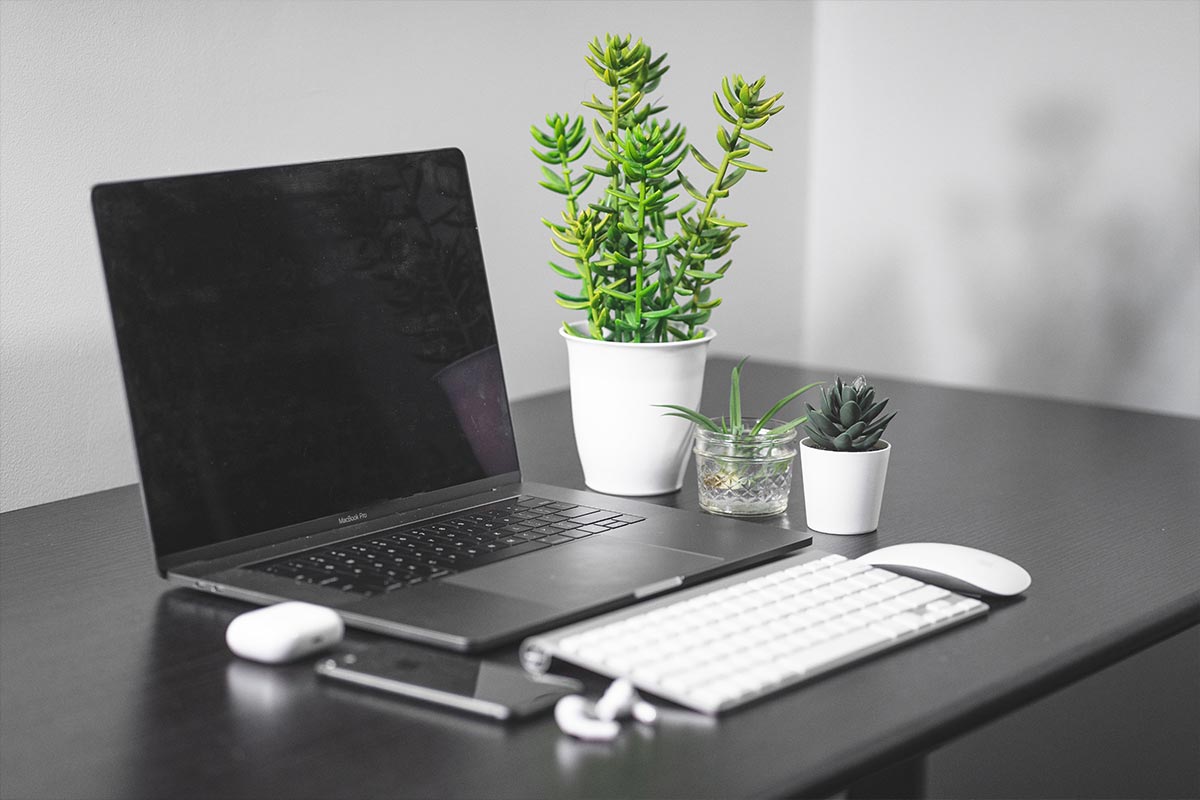
8. Add one plant
A little greenery is the fastest way to make a work corner feel alive and cared-for instead of purely functional, and one plant is genuinely all you need. It softens the hard lines of a desk and a laptop and adds the kind of small life that makes a space feel like somewhere a real person works.
If your corner gets a bit of light like mine does, a cheap low-maintenance plant like a pothos or a little snake plant is nearly impossible to kill and costs a few dollars, or nothing if a friend gives you a cutting. If it’s a dark corner, a good fake plant does the same visual job with zero upkeep, just pick one that doesn’t look obviously plastic. I keep a small trailing pothos on my shelf and it single-handedly makes the corner look like someone who has their life together works there, which is not always strictly true but I’ll take the visual. One plant is my go-to finishing touch in every space, which you’ll notice all over my budget home decor ideas.
Add one plant, real or a convincing fake. Greenery makes a work corner feel alive and intentional for just a few dollars, and one is plenty.
9. Hang cheap art or free printables
The wall right in front of your desk is prime decorating real estate, and a piece or two of art there makes the corner feel like a designed space instead of a spot where a laptop happens to live. The budget version costs almost nothing: thrifted frames plus free printable art off the internet.
I grab frames from thrift stores for a dollar or two each, and it genuinely doesn’t matter if they don’t match, because a slightly mismatched little gallery looks charming rather than sloppy. Then I fill them with free printables, a calming print, a favorite quote in a nice font, a line-drawing, all of which you can find and print for free. Hung at eye level in front of the desk, even one or two small framed pieces make the whole corner feel curated. If drilling isn’t allowed in your rental, adhesive strips hold light frames fine and peel off without a mark. Pick art that’s calm rather than busy, since you’re staring at it while trying to concentrate.
Hang a couple of cheap prints in thrifted frames in front of the desk. It makes a work corner feel designed, and free printables cost you only the ink.
10. Raise your laptop with a stack of books
Working on a laptop flat on a desk means looking down all day, and your neck pays for it. The fix is to raise the screen closer to eye level, and you do not need to buy anything to start: a stack of books under the laptop does the exact job a pricey stand does.
I stacked three hardcovers I was never going to read again and set my laptop on top, and suddenly the top of the screen was near eye level and I wasn’t craning down like a question mark anymore. If you want something less wobbly, a basic laptop riser costs about $10 and folds flat, but the books are free and work fine while you decide. The one catch is that raising the screen means the built-in keyboard is now too high to type on comfortably, which is exactly why the next-level version pairs the riser with a separate keyboard, covered a couple of tips down. Start with books tonight and see how much your neck thanks you tomorrow.
Raise the laptop screen toward eye level with a stack of books or a cheap riser. It’s free or nearly free, and it saves your neck from a full day of looking down.
11. Keep the desktop clear with a tray and a caddy
A clear desk is the difference between a corner that invites you to work and one you avoid, and it’s completely free to keep clear once you give everything a home. A small tray and a caddy are the cheap tools that turn desktop clutter into something that looks styled instead of scattered.
On my desk I keep just the laptop, a small tray, and a pen cup, and everything else lives on the shelf or in a drawer. The tray holds the two or three things I actually use daily, my phone, a pen, a little notebook, so they look like a deliberate little group instead of random objects, and a pen caddy corrals the writing stuff that would otherwise roll everywhere. At the end of each work session I reset the surface back to just those things, which takes thirty seconds and means I sit down to a clear desk every time. A cleared desk genuinely helps you focus, and it makes even a $15 secondhand desk look considered.
Keep the desktop clear with a tray for daily items and a caddy for pens. A clear surface costs nothing and makes a cheap desk look styled and calm.
12. Use a small rug to zone the office corner
A small rug under the desk and chair is the cheapest way to tell your brain, and anyone who walks in, that this corner is its own thing. It visually separates the workspace from the rest of the room, adds warmth and pattern to the floor, and pulls the desk and chair together into one deliberate little zone.
I put a small flatweave rug down under my desk and chair, and the corner immediately read as a defined office area instead of a desk shoved against a bedroom wall. Look for something washable and cheap, since a desk chair rolling around will wear it, and stick to a low-profile weave so the chair moves easily over it. The rug also warms up cold rental flooring and adds a bit of personality underfoot, which is the same way a small rug transforms a hard, cold floor in my bathroom decor ideas on a budget. Anchoring the corner with a rug is a small trick that makes the whole setup feel planned.
Lay a small, cheap rug under the desk and chair to zone the corner. It defines the workspace, warms the floor, and pulls the setup into one deliberate spot.
13. Add a laptop stand and a separate keyboard for your neck
This is the tip your future self will thank you for. Working hunched over a laptop for hours is genuinely bad for your neck, shoulders, and wrists, and the cheap fix is to raise the screen with a stand and add a separate keyboard and mouse at desk height so you can type without hunching. It’s the one place on this list where spending a little is worth it, because your body is not removable at move-out.
I use a folding laptop stand that cost about $10 to lift the screen to eye level, and a cheap wired keyboard and mouse so my hands sit low and relaxed while the screen sits high. The rule of thumb is screen top at eye level, elbows at roughly a right angle, wrists flat and neutral, which stops the slow neck ache that a whole day of laptop-hunching gives you. If you want the actual guidelines, OSHA has a genuinely useful free rundown, and I checked mine against OSHA’s computer workstation ergonomics tips to make sure my cheap setup wasn’t quietly wrecking my posture. You can build an ergonomic corner for the price of a stand and a basic keyboard, and it’s the best small money you’ll spend.
Raise the screen with a stand and add a separate keyboard and mouse. A cheap ergonomic setup saves your neck and wrists, which no move-out will refund you.
14. Build a shut-down ritual so work actually ends
When your office is three feet from your bed, work never really ends, and that’s the hidden cost of a home office in a small apartment. The fix costs nothing and it’s the tip nobody mentions: a small closing ritual that tells your brain the workday is over, so you can stop.
Mine is simple. I close the laptop, tidy the desk back to just the tray and pen cup, switch off the warm lamp, and physically move the chair a foot away from the desk so the corner reads as closed. That’s the whole thing, maybe two minutes, and it draws a line between “working” and “off” that a corner in your bedroom otherwise never gives you. Some people put the laptop in a drawer or a bag once they’re done for the day so it’s out of sight, which works even better if you’ve got the space. The point is that a workspace this close to your life needs a deliberate off switch, or you’ll be answering emails from bed again, which is the exact thing we’re trying to escape.
End each day with a tiny shut-down ritual: close up, tidy the desk, kill the lamp, move the chair. It’s free, and it lets work actually end in a one-room life.
15. Add cozy budget touches, a candle and a good mug
Once the corner works, a couple of small cozy touches make it somewhere you actually want to sit, which matters more than it sounds when you’re trying to build a work habit. The nice part is that these cost almost nothing and they’re the finishing layer that makes the whole setup feel like yours.
I keep a cheap candle on the shelf and one genuinely nice mug that lives on the desk, and lighting the candle has quietly become part of my “okay, we’re working now” signal. A good mug, a coaster, a small framed photo, a cheap desk plant, these little things turn a functional corner into a spot you’re glad to be in, and none of them cost more than a few dollars from a thrift store or the discount aisle. You don’t need much, just one or two things that make sitting down feel a little nice instead of a little grim. Choosing the cheap candle over the $30 designer one is exactly the kind of swap that fills my frugal living tips for beginners.
Add a couple of cozy touches, a cheap candle and a mug you love. For a few dollars they make the corner somewhere you actually want to sit and work.
The stuff I got wrong
Because I got this wrong a few times before the corner finally came together.
My first and biggest mistake was waiting for a “real” office. For months I told myself I’d set up properly once I had a bigger apartment with a spare room, so I kept working from bed and my couch and the kitchen table, and my posture and my focus both suffered the whole time. The corner was available the entire time. All that waiting was months I could have spent at an actual desk if I’d just accepted that a corner counts.
Second, I bought stuff before I understood the space. Early on, excited to have a workspace, I ordered a few things online without measuring, and the “compact” desk organizer I bought took up half the tiny surface it was supposed to keep clear. Building the corner up slowly, adding one thing and living with it for a week before buying the next, worked far better than the one big enthusiastic order that mostly didn’t fit.
Third, I ignored ergonomics until my neck made me. I had the corner looking cute, the plant and the pinboard and the warm lamp, and I still worked hunched over a flat laptop for weeks until a persistent ache between my shoulders finally made me stack some books under it. The cheapest fix on the whole list, raising the screen, was the one I put off longest, for no good reason except that a sore neck sneaks up slowly.
And one thing that isn’t really a mistake, just a small ongoing situation I’ve made peace with. In my most ambitious ergonomics phase, convinced I was going to build the perfect posture corner, I ordered a little ergonomic footrest online for about $20, the kind that’s supposed to sit under your desk and tilt your feet at a healthy angle. It turned out to be the wrong height for my thrifted desk, so my feet don’t actually reach it in any position that helps, which makes it useless as a footrest. It now lives under the window, holding a single pothos, as a plant stand. It’s a very good plant stand. I’m weirdly fine about it, and I’ve stopped bringing it up when people ask why the plant is on a footrest.
What actually changed
The first thing I noticed, once the corner came together, was that I stopped working from bed. That sounds small and it changed my whole week, because “work” and “rest” finally happened in two different places instead of the same three square feet, and my sleep and my focus both got quietly better for it. The corner became the spot my brain switches into work mode, and my bed went back to being just a bed.
The other thing that changed was how it felt to sit down and start, which matters more than I expected. Sitting at a corner that’s warm and clear and a little bit cute, with a plant and a candle and my own stuff on the pinboard, makes starting work feel less like a chore and more like a small ritual I don’t mind. And the whole setup cost me under $50 and lifts right out when I move, so none of it was money wasted on an apartment I don’t own.
If you take one thing from all of this, take the desk-chair-light rule and start this week: set up a table you already own, put a warm lamp on it, and pull up any chair with a cushion, for under $10 total, and just sit there and work for a day before you buy anything else. That small, low-risk start is the whole spirit of home office ideas on a budget, because you’re a renter making a corner work for you without spending money you won’t get back or needing a room you don’t have. The rest of the apartment gets the same treatment in my apartment decorating on a budget, if you want to keep going.
Questions people ask me
What are the best home office ideas on a budget?
Start with the bones: a secondhand or repurposed desk, a comfortable chair fixed up with a cushion, and a warm task lamp instead of the harsh overhead. Those three make a corner actually workable for well under $40. From there, go vertical with a cheap shelf or pinboard to clear the surface, raise your laptop with books or a $10 stand, add a plant and a small rug to zone the space, and keep the desktop clear with a tray. You can build a workspace that looks good and feels good for under $50 without a spare room or a single hole in the wall, because the magic is in a few cheap, deliberate pieces rather than expensive furniture.
How do I set up a home office in a small apartment with no spare room?
Claim a corner. A workspace isn’t a room, it’s a surface, a chair, decent light, and a boundary, and all four fit in a corner of a bedroom or living room. Pick a spot that isn’t already doing another job, ideally near a window, and give it edges with a small rug underneath and a shelf above so it reads as its own zone. Keep the desk small so it fits, build storage upward on the wall to save floor space, and add a shut-down ritual so work stops when you leave the corner. Done this way, a three-foot slice of floor becomes a real, functioning office.
How can I make a cheap desk setup look good?
Three cheap moves do most of it: tame the cables, clear the desktop, and add warm light. Bundling cords with a couple of dollars of clips instantly makes a desk look deliberate, keeping only a tray and a couple of daily items on the surface makes it look styled, and a warm task lamp makes the whole corner feel cozy rather than clinical. After that, one plant, a piece of cheap art in a thrifted frame, and a small pinboard add personality. A $15 secondhand desk can look completely put-together, because the expensive look comes from tidiness, warm light, and a couple of styled touches, not from what you paid for the furniture.
Is a laptop stand worth it, or can I just use books?
Both work, and books are the perfect free way to start today. Raising your laptop so the top of the screen is near eye level stops the neck-craning that a whole day of looking down causes, and a stack of sturdy hardcovers does that job exactly as well as a stand. The upgrade to a proper folding stand, usually around $10, is worth it mainly because it’s less wobbly and folds flat, and because pairing it with a separate cheap keyboard and mouse lets you type at a comfortable height while the screen sits high. Start with books tonight, and buy the stand later only if you want the tidier version.
How do I stop work from taking over when my office is in my bedroom?
Build a shut-down ritual and give the corner a physical boundary. When your desk is a few feet from your bed, work bleeds into rest unless you draw a deliberate line, so end each day by closing the laptop, tidying the desk, switching off the task lamp, and moving the chair away so the corner reads as closed. Some people put the laptop out of sight in a drawer or bag overnight, which helps even more. The rug and lamp that zone the corner during the day also help your brain treat it as a separate place, so when you step away from it, work is genuinely over.
How much does it cost to set up a home office on a budget?
You can put together a real workspace for under $50, and a working one for under $10. A table you already own plus a warm lamp you already have is a functioning corner for almost nothing. Add a $15 secondhand desk, a cheap secondhand chair with a cushion, a $10 laptop stand, a small shelf, a plant, and a rug over a few weeks and you’re still under $50 total. Facebook Marketplace, thrift stores, and end-of-lease giveaways are where the budget stretches furthest, especially in student areas where desks and chairs get given away every few months. Spread it out, buy only removable pieces, and nothing you spend is wasted when you move.
One last thing
Anyway. My home office is still a corner of my bedroom, three feet of floor next to a radiator that clanks at 6 every morning, but there’s a $15 desk from Dev with a coffee ring I’ve hidden under a mouse pad, a warm lamp glowing instead of the overhead, a pothos on the shelf, and a little rug telling everyone this counts as an office. The ergonomic footrest is still under the window being a plant stand, holding its one pothos and doing a job it was never bought to do, and honestly it’s better at that than it ever would have been at the feet thing.
Okay. I think the only thing left is to decide whether I’m ever going to admit to Maddie that the plant stand is technically a footrest. Not today, though. I’m going to go sit in my corner and actually get some work done for once.
👤 About the Author
Hi, I’m Millie — a college student writing about real life on a budget, from money to self-care to making a small rental feel like home. I share what actually works when you’re broke, busy, and setting up a whole workspace in the corner of a bedroom you’re not allowed to drill into. You’ll find more honest home and budget living tips across SavvyHerLife.
This post was researched and drafted with AI assistance, then reviewed and personally edited by Millie. All stories, brand mentions, dollar amounts, and recommendations are based on real experience.